ONE PLATFORM.

MULTIPLE VALUE PATHWAYS
SEACoRe™ is being developed not around a single end product, but around the potential to recover differentiated marine-derived fractions for multiple application pathways.
As technical validation progresses, these fractions can be evaluated for their functionality, consistency and suitability within selected industrial applications.
01. FEEDSTOCK VALORISATION
From Variable Biomass to Greater Value
Creating new value pathways for marine biomass through controlled, flexible and scalable bioprocessing.
SEACoRe™ is being developed to investigate how seaweed species, composition, condition and form influence processing and fraction recovery. This creates a potential pathway for growers, harvesters, processors and biomass owners seeking to understand and potentially increase the value derived from suitable marine resources.

FEEDSTOCK UNDERSTANDING
Characterise candidate biomass to understand relevant variability before processing.
PROCESSING SUITABILITY
Evaluate how suitable feedstocks interact with the SEACoRe™ process architecture and recovery pathway.
VALORISATION PATHWAYS
Advance promising feedstocks toward technically and commercially relevant whole-biomass utilisation opportunities.
02. INDUSTRIAL BIOTECHNOLOGY
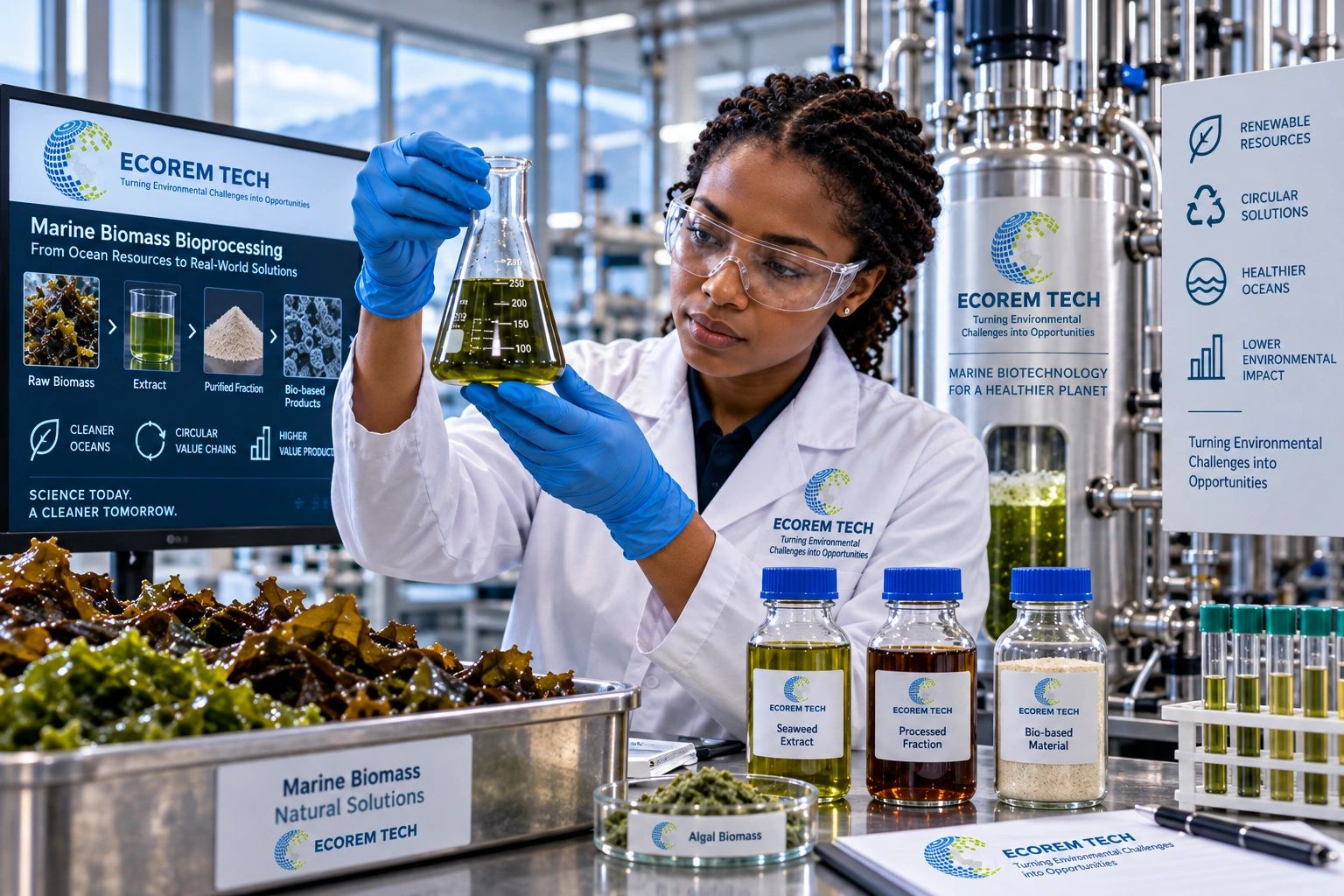
Marine-Derived Inputs for Biotechnology
Exploring marine-derived fractions as potential functional inputs and intermediates for biotechnology applications.
SEACoRe™ provides a platform for recovering differentiated marine fractions and building the evidence needed to understand their composition, consistency and potential functionality. Promising fractions can subsequently progress into application-specific evaluation with biotechnology and industrial partners.
MARINE-DERIVED INPUTS
Explore renewable fractions as candidate functional inputs and intermediates.
FUNCTIONAL EVALUATION
Characterise candidate fractions for composition, consistency and application-relevant properties.
APPLICATION DEVELOPMENT
Progress promising fractions toward targeted testing and collaborative development.
03. FERMENTATION & BIOMANUFACTURING
Supporting Biological Production Pathways
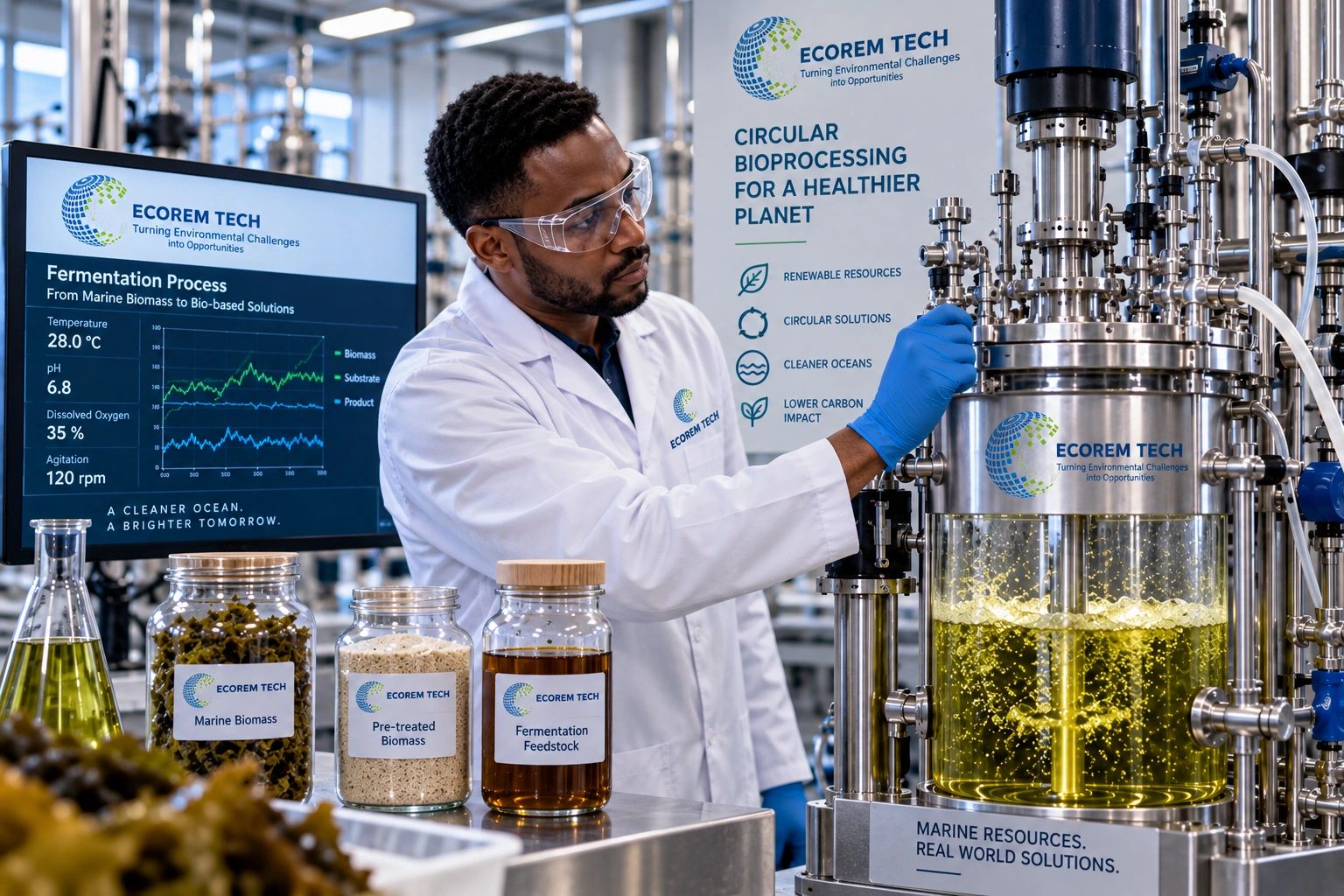
Exploring selected marine-derived streams as potential inputs within fermentation and biological manufacturing processes.
Suitable recovered fractions can be evaluated under controlled conditions to understand their compatibility with specific biological systems and their potential role within downstream fermentation or biomanufacturing pathways.
FEEDSTOCK POTENTIAL
Progress promising fractions toward targeted testing and collaborative development.
PROCESS COMPATIBILITY
Investigate compatibility with relevant organisms, processes and operating requirements.
PROCESS DEVELOPMENT
Advance promising candidates through controlled testing and application-specific optimisation.
04. SUSTAINABLE MATERIALS
Marine-Derived Building Blocks for Emerging Materials
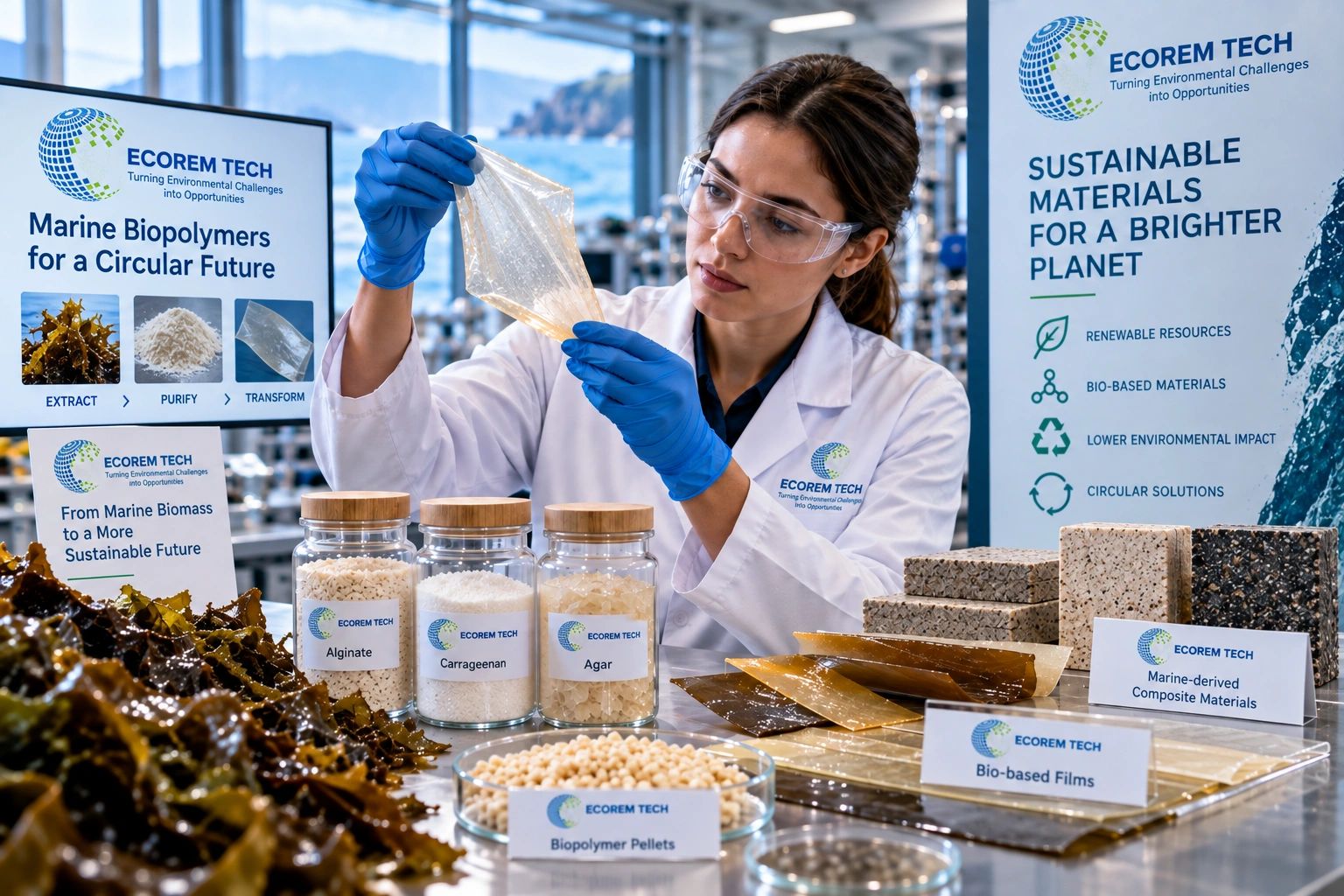
Exploring recovered marine fractions as potential components of bio-based and lower-impact material systems.
Selected SEACoRe™ fractions can be characterised for properties relevant to material development and subsequently evaluated within experimental formulations and appropriate material systems.
MATERIAL FRACTIONS
Characterise recovered fractions for potentially useful material properties.
FORMULATION POTENTIAL
Evaluate suitable candidates within experimental material formulations.
PERFORMANCE VALIDATION
Test promising formulations against application-relevant physical and functional requirements.
05. AGRICULTURE & BIOLOGICAL INPUTS
Exploring Marine-Derived Functionality for Biological Systems
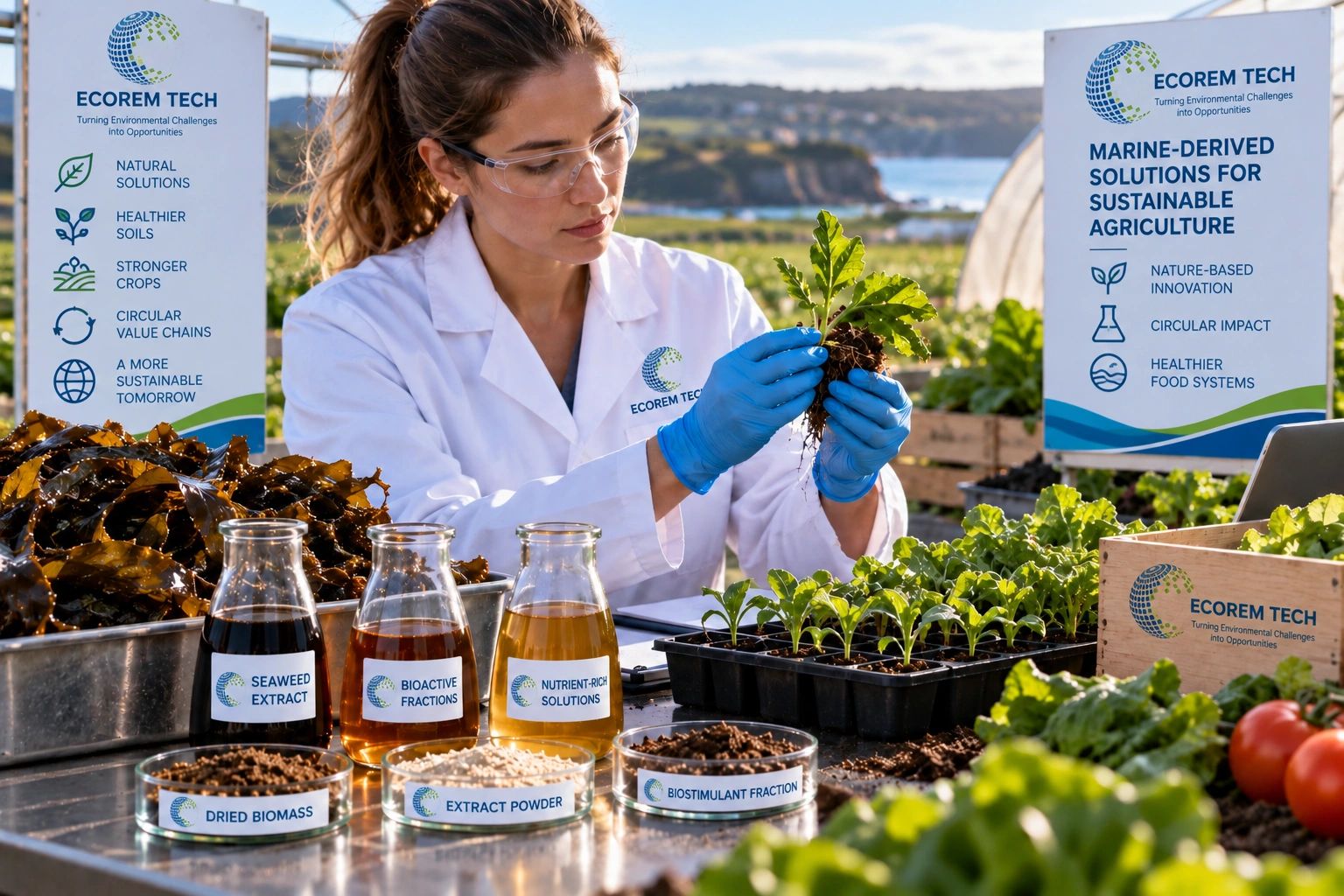
Investigating whether suitable marine-derived fractions could provide functional inputs for selected agricultural and biological applications.
Candidate fractions can be characterised and screened to determine whether they exhibit properties warranting further investigation within appropriate plant, soil or biological systems.
FRACTION CHARACTERISATION
Understand candidate fraction composition and properties.
FUNCTIONAL SCREENING
Evaluate selected fractions against clearly defined biological application criteria.
APPLICATION VALIDATION
Advance promising candidates through controlled application-specific testing.
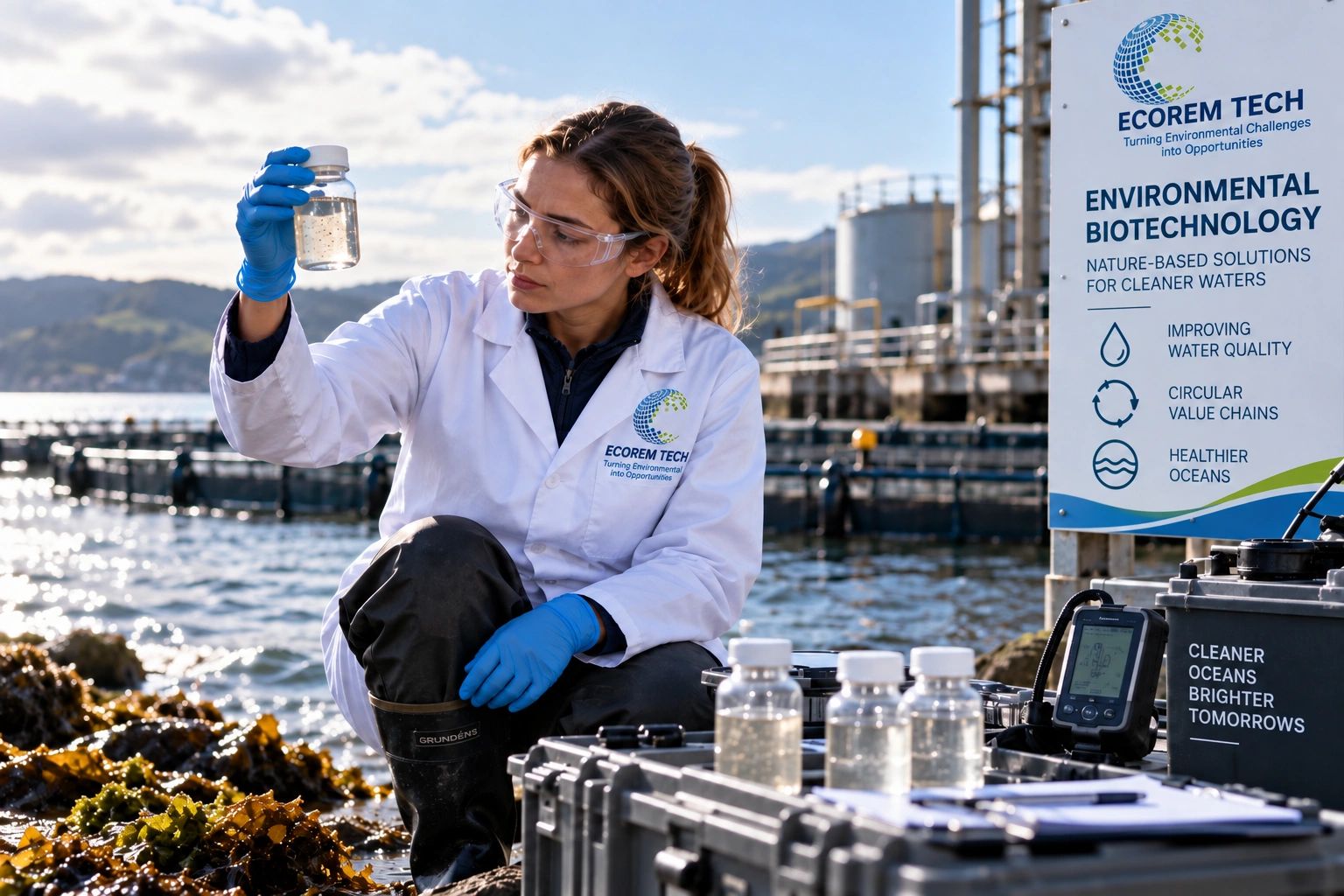
06. ENVIRONMENTAL BIOTECHNOLOGY
Marine Biotechnology for Environmental Applications
Exploring whether selected marine-derived fractions and process streams could contribute functionality within appropriate environmental biotechnology applications.
As evidence develops, candidate streams can be screened for properties relevant to selected environmental systems and advanced where technically justified into application-specific testing.
FUNCTIONAL SCREENING
Identify properties potentially relevant to environmental applications.
SYSTEM COMPATIBILITY
Evaluate promising candidates within defined biological or environmental treatment contexts.
APPLICATION VALIDATION
Progress suitable candidates through targeted technical validation.
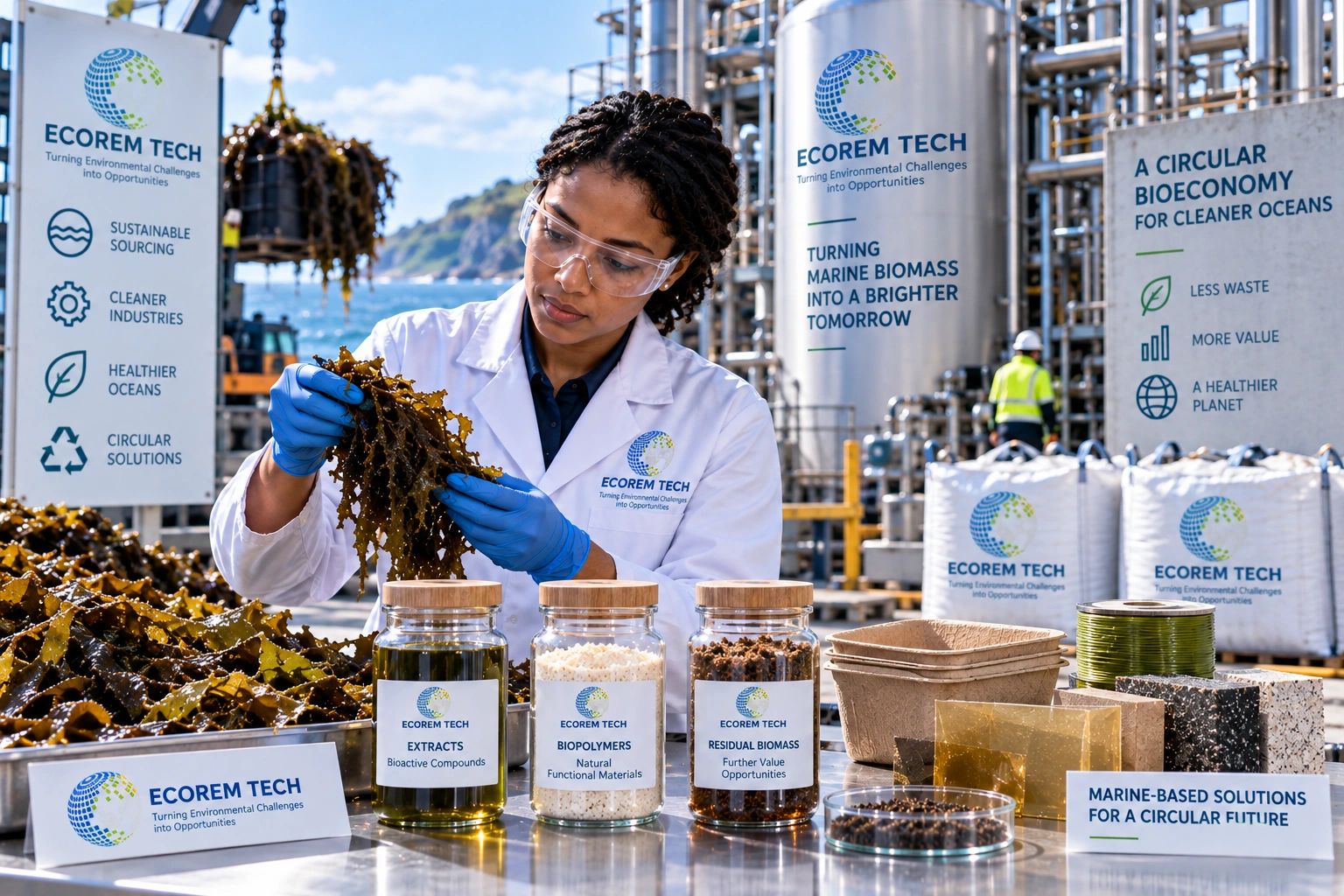
07. CIRCULAR BIOECONOMY
More Value From the Whole Resource
Exploring how greater value can be recovered from renewable marine biomass through integrated resource utilisation.
SEACoRe™ takes a whole-resource perspective, considering primary recovered fractions alongside residual streams, material flows and resource requirements to identify opportunities for improved utilisation and complementary value recovery.
WHOLE-RESOURCE UTILISATION
Understand the destination and potential value of multiple material streams.
VALUE RECOVERY
Explore complementary pathways for primary and residual fractions.
CIRCULAR PATHWAYS
Identify opportunities for recovery, reuse and connection with wider biological and industrial systems.
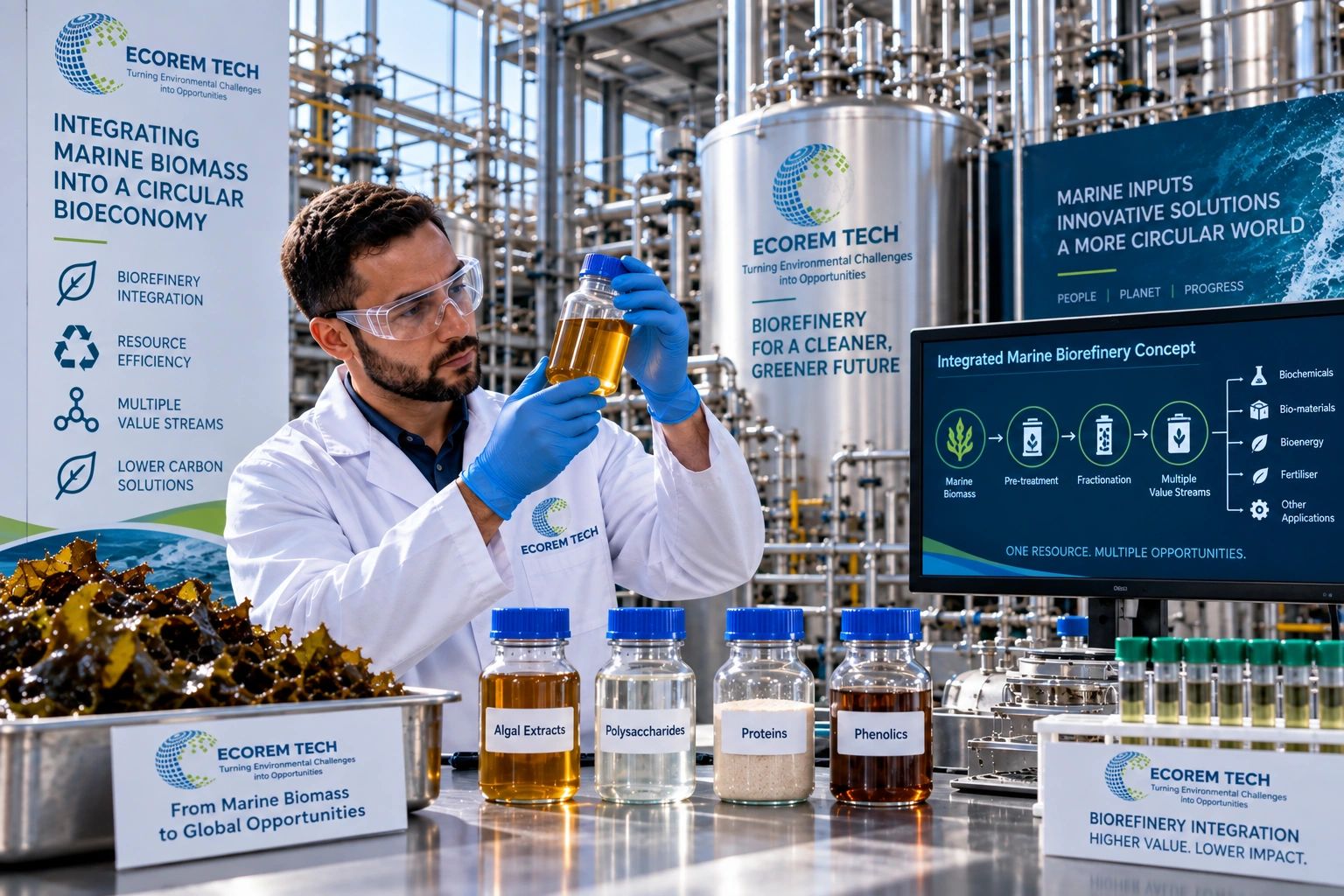
08. BIOREFINERY INTEGRATION
Designed to Connect
Exploring how modular marine bioprocessing could integrate with wider biomass-processing and industrial systems.
SEACoRe™ is being developed as a modular platform rather than an isolated processing step. As technical maturity increases, its process stages, material streams and resource requirements can be evaluated for integration with complementary technologies and wider biorefinery infrastructure.
MODULAR INTEGRATION
Configure appropriate process stages around feedstock, application and infrastructure requirements.
CONNECTED VALUE STREAMS
Connect recovered and residual streams with complementary downstream pathways.
PATHWAY TO SCALE
Use pilot evidence, material/resource balances and engineering assumptions to inform larger-scale integration.